A pharmacy program that gets stronger every quarter.

Built on a standard, run by your team, backed by a pharmacist. Everything your center needs to make pharmacy a true part of the quality program.
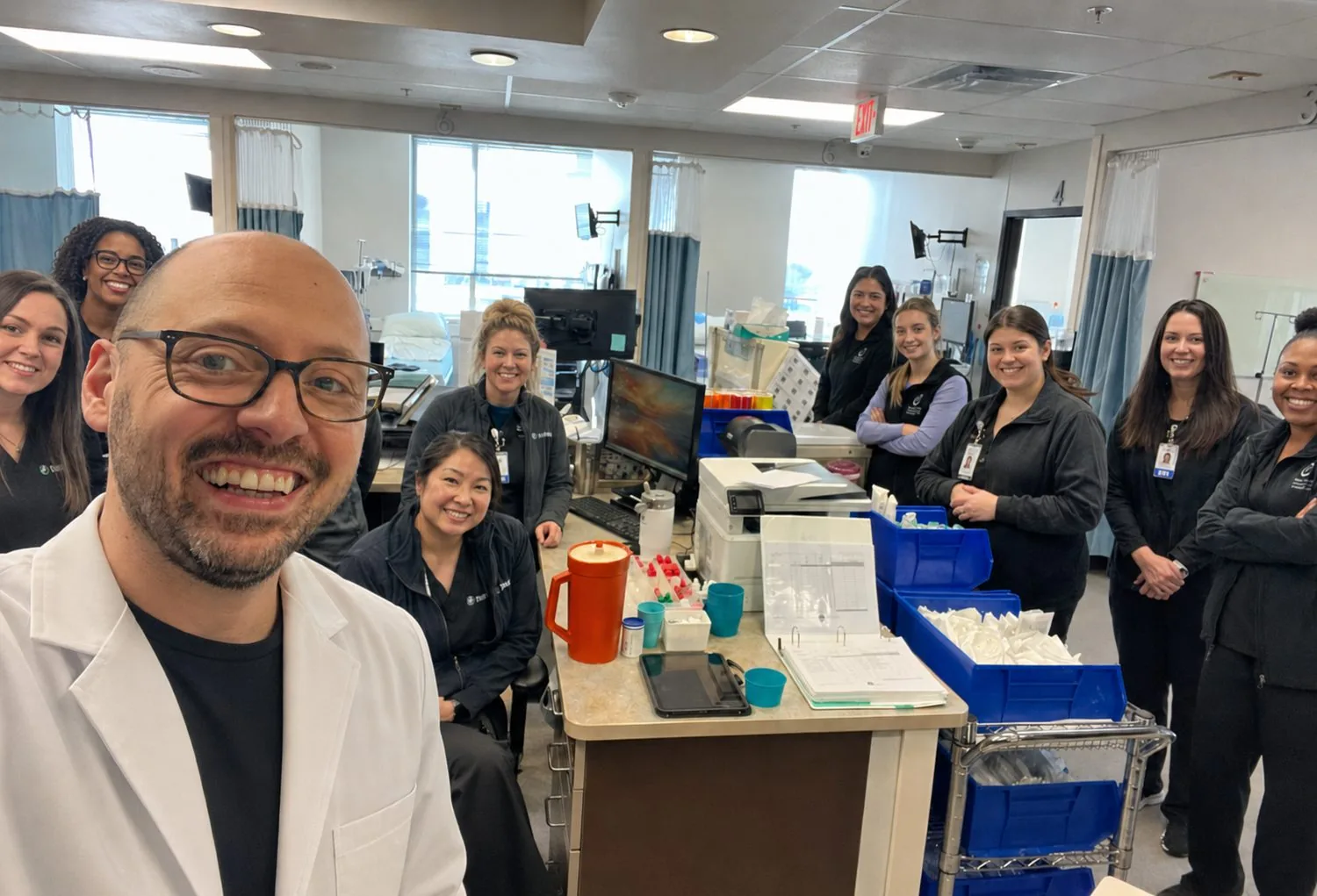
Ambulatory Pharmacist Partners pharmacist with surgery center team
Our promise
  • Better trained teams
  • Fewer surprises
  • A pharmacy program you can depend on

A comprehensive pharmacy program for ambulatory surgery centers. Not just audits.

From controlled substance oversight to board-ready quarterly reports, every service is designed around the regulatory, clinical, and operational realities of ambulatory surgery, with follow-through built in.

Every finding is tracked to closure. Every visit feeds the dashboard. Every education session is documented. The program produces the evidence your team, your leadership, and your surveyors expect.

Pharmacy Program Greenfield Surgery Center
Quarter 4 · 2026
Pharmacy Survey Readiness 92%
Open Findings 3
Closed This Quarter 11
Staff Trained 24/26
Pharmacy Program Survey Readiness, Quarter Over Quarter
25%
Quarter 1
52%
Quarter 2
76%
Quarter 3
92%
Quarter 4
Controlled-substance count log gap, OR 2 Closed
All high-alert medications properly labeled Verified
Refrigerator temp log, 2 missed days In Progress

A good pharmacy program builds on itself. Here is your first year.

Before Quarter 1 · Onboarding

We start by going deep.

Before the first quarter begins, we redesign the foundation. A full policy review with the changes your state and accreditation body require, a pharmacy program built for your case mix, and a baseline that tells us exactly where to focus.

  • Full policy manual review with rewrites
  • Pharmacy program design for your case mix
  • Baseline assessment of medication management, CS, and storage
  • Workflow and formulary review
  • Licensure and DEA compliance confirmed
Q1

Baseline and structure

Deliverables
  • Baseline readiness audit
  • Prioritized gap list
  • Standardized visit cadence
  • First leadership summary
You see exactly where the program stands and what to fix first.
Q2

Targeted education and follow-through

Deliverables
  • Staff education targeted to gaps
  • Corrective actions tracked
  • First readiness review
  • Trend data begins
Education directly tied to what the program found.
Q3

Readiness and QAPI

Deliverables
  • QAPI quality study underway
  • Mock drill conducted
  • DEA audit readiness check
  • Board-ready quarterly report
The program starts building the evidence a surveyor expects.
Q4

Durability and survey-ready

Deliverables
  • Annual program review
  • Year-over-year trend report
  • Survey-readiness evidence pack
  • Team competency assessment
Year one closes with a program that can carry itself forward.

Every major accreditation body. Every state survey standard.

Ambulatory Pharmacist Partners programs are built around the specific pharmacy standards of every accreditor and state pharmacy board that governs ambulatory surgery centers.

AAAHC

Controlled substance standards, medication management standards, tracer methodology, and infection control readiness.

The Joint Commission

Controlled substance standards, medication management standards, tracer methodology. Prepared for TJC's rigorous survey process.

QUAD A

Medication labeling, beyond-use dating, controlled substance handling, emergency drug kits.

ACHC

USP compliance, drug storage temperature monitoring, quality improvement documentation.

CMS

Conditions for Coverage pharmacy requirements, controlled substance oversight, and quality improvement.

State Pharmacy Boards

State-specific requirements maintained and current wherever you operate.

Start with the foundation. Add the support your center needs.

Every partnership is built on the same idea: pharmacy managed like a true part of the quality program, with a program your team can learn, run, and improve over time.

1
Step 1 · the foundation

The APP Pharmacy Program Foundation

Pharmacy Program Foundation

The standard, training, Pharmacy Lead structure, workspace, and ongoing support that keep medication management organized and current, with one Pharmacy Lead prepared to keep the routine moving between pharmacist visits.

Every partnership starts here
What the foundation includes

Academy · Pharmacy 101 + Leadership Essentials

Short ASC medication, compliance, and safety modules for the whole team: current staff refreshers, new-nurse onboarding, annual refreshers, reassessment, content updates, and competency records.

Pharmacy Lead Certificate

In-depth ASC pharmacy training for your lead: medication management, safety, pharmacy operations, DEA compliance, diversion prevention, team training, and accreditation readiness. Applied assignments benefit the ASC within 90 days.

Pharmacy Lead Operating Support

The workspace, pharmacist access, updates, drills, and ongoing training that keep the routine moving: certificate renewal, national ASC Pharmacy Lead calls, shortage and recall watch, regulatory updates, drill support, and pharmacist Q&A.

Shared ASC pharmacy standard
Training and competency records
Pharmacy program owner with a workspace and routines
Findings, action plans, mock drills and pharmacist support

Surveyors don't expect perfection. They expect a systematic process for addressing imperfection. The foundation is that process.

2
Step 2 · the support model

Choose your pharmacist support model.

After the foundation is in place, add the pharmacist support model that fits your center. The standard, training, workspace, and program structure stay the same.

Keep your current pharmacist

For centers with a pharmacist they already trust
Keep the pharmacist you already work with. APP adds the standard, training, workspace, and follow-through structure around the relationship so the program builds on itself.
  • Structure around your current pharmacist
  • A program and workspace to document everything

Nurse-led + APP virtual pharmacist

For centers building their own internal Pharmacy Lead
Your Pharmacy Lead manages the day-to-day medication routine using the APP structure. APP provides the workspace, pharmacist Q&A, virtual oversight, and quarterly readiness review, so routine support does not require an in-person pharmacist visit where permitted by state requirements.
  • Virtual pharmacist oversight and Q&A
  • Pharmacist-guided, nurse-led audit cadence

APP pharmacist partner

For centers that want hands-on, in-person support
APP matches your center with a pharmacist in your community who comes on-site to do the audits in person, review, prioritize, and train. Priced by visit frequency and market.
  • A pharmacist in your community
  • On-site, pharmacist-led audits and training
Included in every support model
Findings tracked to closure, every review
QAPI-ready quarterly reporting
Controlled-substance and DEA readiness
Drug diversion prevention support
Enterprise · For multi-center groups and management companies

One pharmacy program standard across every center.

Roll the same standard, training, workspace, and reporting across your whole portfolio, with the structure leadership needs to manage pharmacy as part of quality at scale.

  • Portfolio dashboard and multi-site reporting
  • Standardized training and competency tracking
  • Executive summaries and cross-center trends
  • Quarterly business reviews
  • Program rollout and pharmacist network coordination
  • New center onboarding support
De Novo · Startup surgery centers

Open with a pharmacy program already in place.

Pharmacy is one of the last things most de novo timelines account for. APP helps you build the pharmacy program before the first case, including formulary, purchasing, storage, controlled substances, staff training, policies, pharmacist support, and opening readiness.

  • Opening formulary and purchasing setup
  • State licensing, DEA registration, and CSOS setup
  • State-specific policy manual
  • Medication storage, emergency medications, and controlled-substance workflow design
  • Staff education before opening day
  • Survey readiness from day one