National Pharmacy Program for Surgery Centers.

Ambulatory Pharmacist Partners helps ambulatory surgery centers build pharmacy programs that are survey-ready, DEA-ready, structured, teachable, and built to last.

Our promise
  • Better trained teams
  • Fewer surprises
  • A pharmacy program you can depend on

Nurses weren't trained to run a pharmacy.

In most ASCs, that is exactly what they are asked to do. Usually with little training, little oversight, and a dozen other priorities pulling at them. Ambulatory Pharmacist Partners gives them a program they can actually run: clear inspections, practical education, tracked follow-ups, and support from a pharmacist who understands surgery centers.

Survey readiness

Prepare before the surveyor walks in, with structured visits, staff question readiness, and documentation leadership can actually use.

Controlled substance and DEA audit readiness

Strengthen controlled substance accountability, documentation, diversion awareness, and readiness for deeper DEA questions.

Staff education

Teach the pharmacy topics ASC nurses need to know: medication ordering, labeling and safe injection practices, diversion red flags, and emergency preparedness.

QAPI support and board-ready reports

Turn medication management into a meaningful quality study with board-ready summaries every quarter.

A pharmacist expert, dedicated to your center

A licensed pharmacist who knows your center, your team, your history, and answers when you call between visits.

Drills and mock audits

Malignant hyperthermia drills, drug diversion drills, and DEA mock audits. Rehearse the high-stakes moments before any of it is real.

See all services →

Opening a new surgery center? We build the pharmacy program from day one: licensing, policies, DEA registration, and survey readiness before your first case.

Opening a New Center →

A true pharmacy program helps your team build the knowledge, processes, and habits to manage medications with confidence.

The basics matter: narcotic counts, expired medication checks, chart reviews, and inspection forms. But basics are not the whole program. Your pharmacy program should teach the team, surface risk, track follow-through, and make the center stronger.

Structured for the center

A clear process for visits, findings, education, follow-through, and reporting.

Teachable for staff

Nurses know what to do, what to say, and why it matters.

Clear for leadership

Leaders see what was found, what was fixed, what remains open, and where the program is getting stronger.

Ready for deeper questions

Surveyors, DEA investigators, and governing boards expect more than a form in a file.

Built to last

The program does not depend on one person, one visit, or one good quarter.

Followed through to closure

Every finding has an owner, a deadline, and documented evidence of completion.

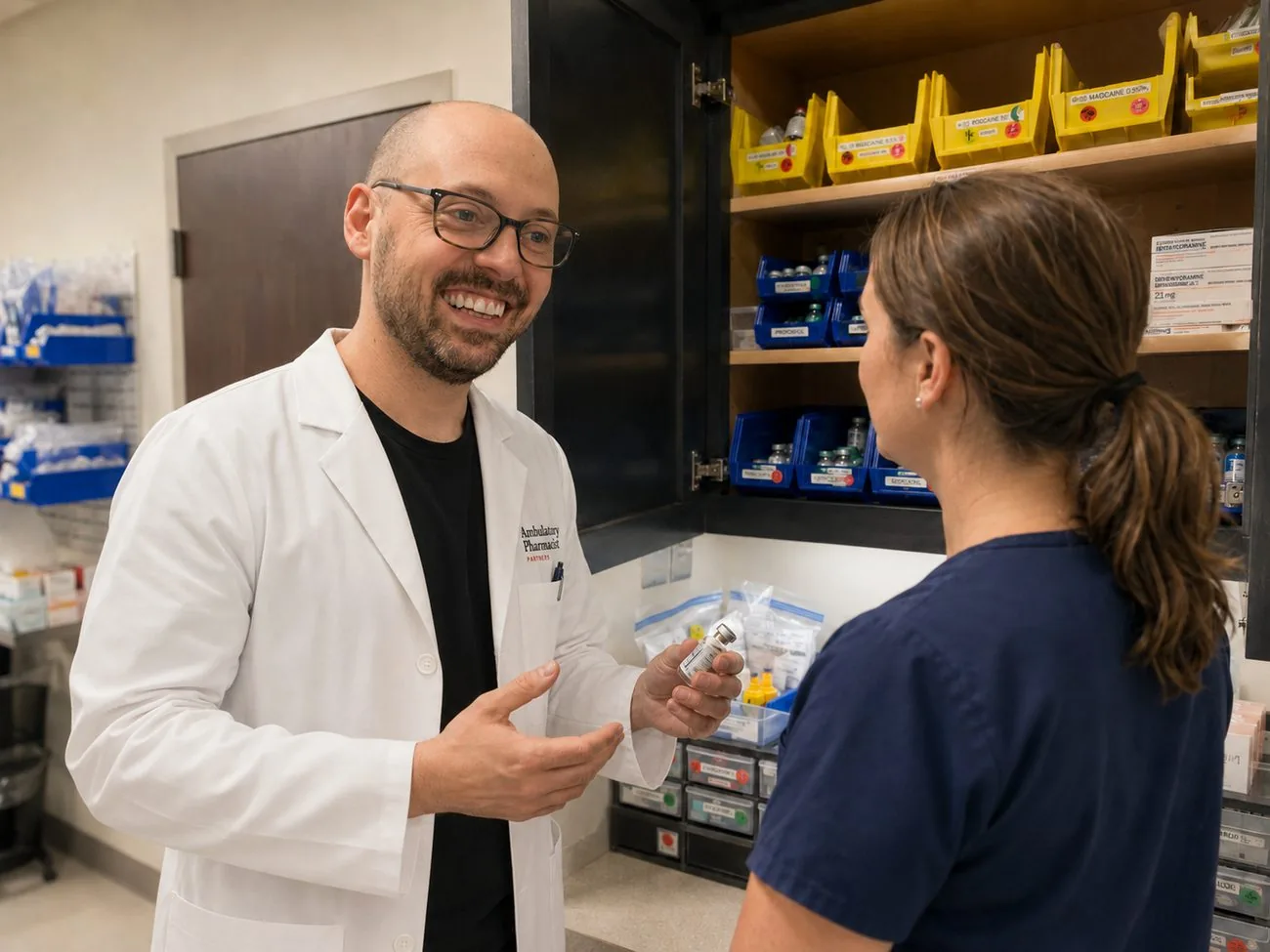
Pharmacist training a surgery center nurse at the medication cabinet

Everything your pharmacy program needs.

From controlled substance oversight to board-ready quarterly reports, every service is designed around the regulatory, clinical, and operational realities of ambulatory surgery, with follow-through built in.

Regular Audits and Inspections

Structured pharmacy audits with documented findings, corrective actions, and follow-through. Every finding in your dashboard within 4 hours of the visit.

Policy Review and Regulatory Updates

State-specific pharmacy policies reviewed and updated as standards, accreditation requirements, and DEA regulations change.

Controlled Substance Oversight

DEA compliance, two-person witnessed waste, narcotic log cross-referencing, count reconciliation, discrepancy follow-up, and full audit readiness.

Drug Diversion Prevention

Detection protocols, staff accountability structures, and documentation that creates a defensible chain of custody at every step.

Medication Labeling and Pre-Drawn Compliance

Every syringe, cup, and basket verified: drug name, strength, expiration, preparer identity. Observed in the OR, procedure rooms, and prep areas.

Vial Safety and Safe Injection Practice Audits

Stopper disinfection, single-dose vial compliance, multi-dose vial dating and storage, and injection technique observed during procedures.

Emergency Medication and Crash Cart Management

Emergency drug kits verified, sealed, and documented. Crash cart checklists current. MH kits confirmed complete and accessible.

Medication Reconciliation Program

Process verification at every required transition: pre-admission, admission, and discharge. Policy-to-practice alignment confirmed and documented.

Staff Education and New Hire Training

Medication safety, drug diversion awareness, pharmacology, delivered when new staff start, not just once a year.

Drug Cost Management

Formulary review and purchasing optimization for ambulatory care. Real savings without compromising clinical standards.

Survey and Accreditation Readiness

AAAHC, TJC, QUAD A, ACHC, CMS, and state pharmacy board preparation, year-round, not a sprint before notification.

QAPI Program Annual Quality Study

Topic selected, methodology designed, data collected, board-ready summary delivered. Every year.

On-Demand Pharmacist Access

You call, text, message, and we answer. Immediate jeopardy during a survey: we pick up the phone.
Would your team be ready for these pharmacy questions?

Download the 20 pharmacy questions every ASC should be able to answer before the surveyor asks. Free resource for ASC leaders and clinical directors.

  1. Can your team explain how you document and resolve controlled substance discrepancies?
  2. If a surveyor asked to see your current policy manual, would it reflect your current state and accreditation body requirements?
  3. Does your staff know the signs of drug diversion and what to do if they suspect it?
  4. When was your last documented DEA audit readiness check, and what did it find?
  5. What would your QAPI report show for medication management over the last quarter?

Plus 15 more. Download the full list.